
NAS CONFERENCE 2025 – A Report for MAS by David Cleasby
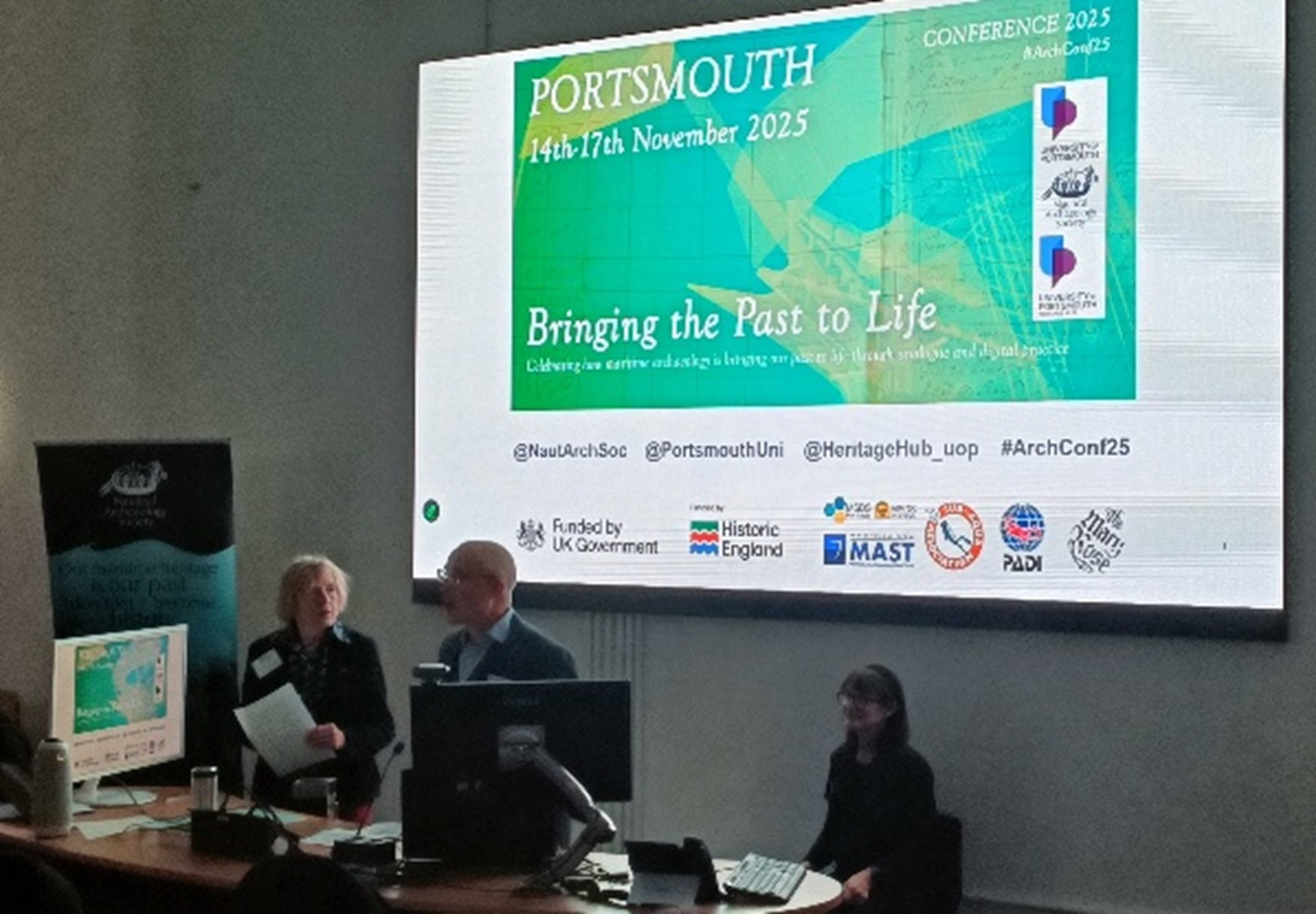
The Nautical Archaeology Conference of 2025 returned to its usual home in Portsmouth. This year’s theme was ‘Bringing the Past to Life’, exploring old and new ways to make maritime archaeology more vibrant, more visually exciting and accessible to both academics and the public alike. The Conference includes various elements; speakers from both academic backgrounds but also dive clubs’ members describing their own archaeological investigations; stalls from both maritime archaeology societies and units, as well as dive clubs; updates on available training courses and fieldwork, and an awards ceremony for those that have achieved NAS certificates for gaining the next training level. It is a very social and friendly event for old friends and easy to make new ones. The food is as ever good and there is a conference dinner, as well as exciting trips, among others to the Mary Rose museum and its conservation labs.
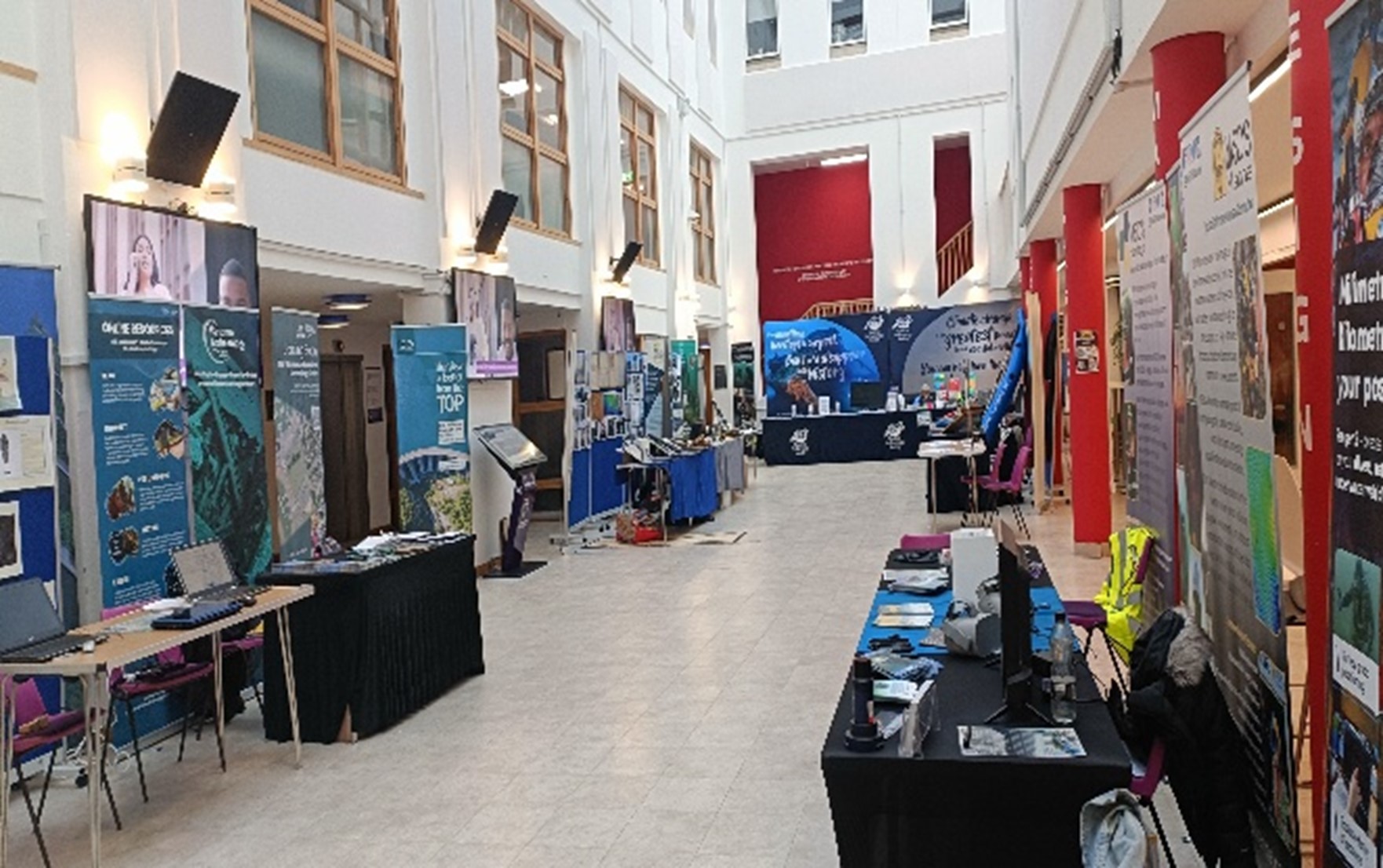
Events included
Carol Ellis showed many if the exciting artefacts recovered from the wreck of the London, an English warship that played a significant role in 17th century British naval history. The ship formed part of a convoy sent in 1660 to collect Charles II from the Netherlands and restore him to the throne. It sank in March 1665, following a gun powder explosion.
Suzanne Marie Taylor gave an innovative, if not a little off the wall, approach to develop the idea of storytelling with a wreck, in this case a 20th century motor launch, ML 286, found abandoned and decayed in a river It involves not just narrating the story of the wreck and the crew , but developing adult plays, poetry and school visits with props and music to tell the wreck’s story, for it to find its own voice.
Dr Tarek Teba, presented amazing 3D reconstructions of the Holland 5 submarine, the latest of a series of early submarines from the late 19th century, and showed their evolution from the 1st to the 5th.
Peta Knott described the work of the citizen science teams recording and publicising wrecks submerged in the sandbanks off Sandwich, on UK’s Kent coast. There are many wrecks there in an area clearly a wreck trap. The amount of participation by the public was inspiring, very much on the level of MAS.
Ella Paul described many of the maritime archaeology finds in Scotland’s National Museums with traditional but also far more vibrant visual methods.
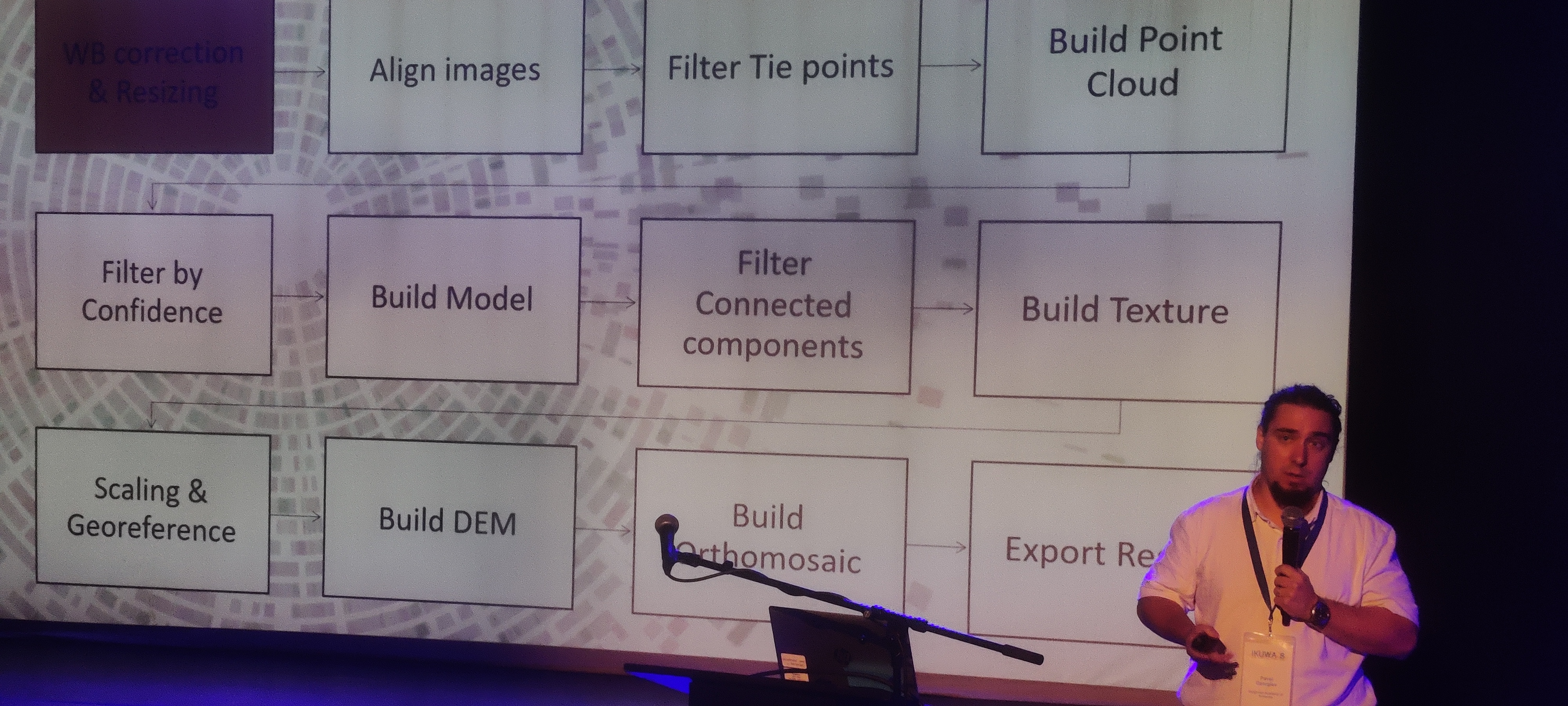
David Johnston described his work as the licensee for the UK Protected Wreck the Hazardous, a 1706 warship wreck off the south coast of England. He carried out spectacular 3D photogrammetric modelling, and particularly a Virtual dive trail., with several important technical insights.
Brandon Mason, from the Maritime Archaeological Trust, delivered spectacular 3D Photogrammetric imagery of wrecks. Particularly with the detail and texturization of the images. It seems that NAS is aiming to gain Europe Horizon funding with him and the Maritime Archaeology Trust to deliver a shared project, presumably directly related to 3D photogrammetry.
Lauren Tidbury spoke about the history of maritime archaeology research, describing how we got to where we are today, lessons learnt and new possible directions.
Aya Helmy talked about shipbuilding in Roman Egypt, from the ship designs and reconstructions to examining papyrus documents detailing contracts between ship builders and customers, particularly the grain supply for Rome. It gave some insights into the mechanics of trade within ports.
Dr Richard Walker told the story of HMS Exmouth, torpedoed in WW2 while defending a convoy. The story of its life and sinking was excellent, as were the descriptions of its inner life from the engineering drawings.
Dr Dani Newman gave great talk about Honor Frost’s investigations in the harbour in Alexandria to explore th remains of the Pharos Lighthouse.
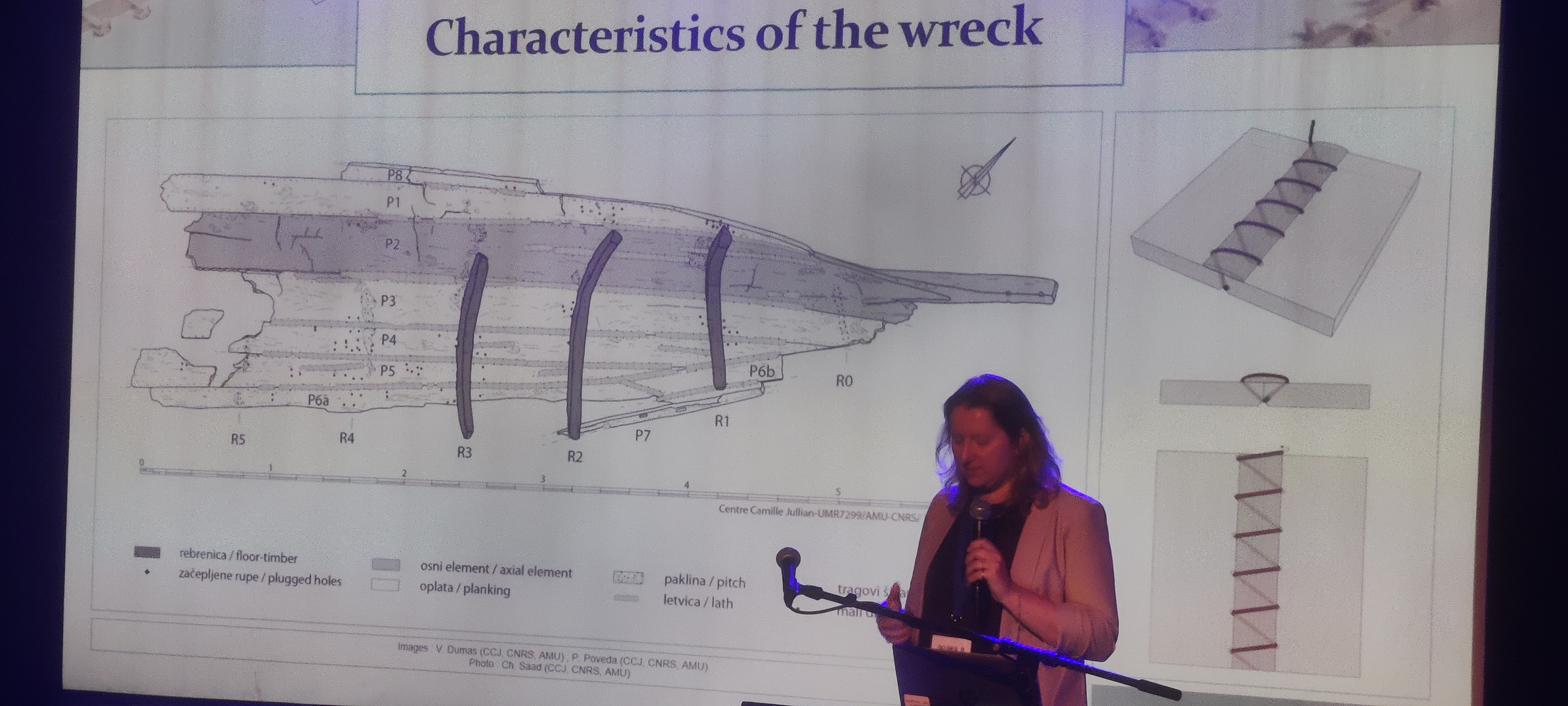
Catherine Holt described the Bronze Age Dover Boat, a sewn plank boat, the oldest found in British waters from around 1500 BC. It described the boat, how the museum was formed and innovative new ways to present it.
Last of all, Elaine Davey described the investigation of the Newport Ship, a large 15th century medieval wreck wit timber from the Basque region of Spain, that sank in Wales. The cargo of many types including lots of barrels of wine from Spain indicate a thriving trade between the Uk and the continent. This wreck represents the most important medieval wreck in the UK.
An Awards ceremony followed in which members were given certificates and applause for achieving their NAS Foundation in Maritime Archaeology (equivalent to Part 1) and NAS Certificate in Maritime Archaeology (gained after 90 contact hours in courses, events, fieldwork, personal research and other maritime archaeology associated events), and the NAS Award in Maritime Archaeology (gained from 300 contact hours or research in maritime archaeology, as well as a 2000 word report)
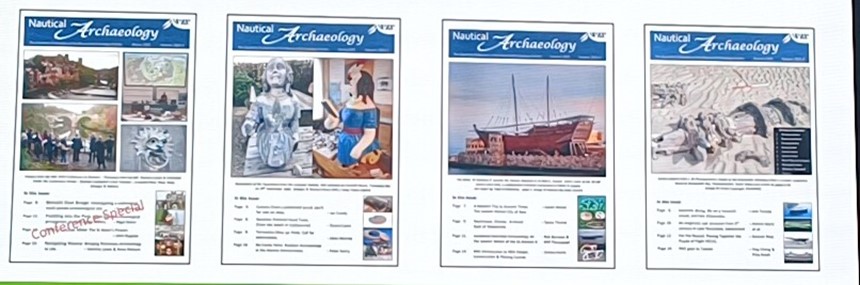
Also of interest is that the NAS newsletter is starting back up, 4 copies out already, and would be excellent for us to receive as a regular pdf, if not hard copies.
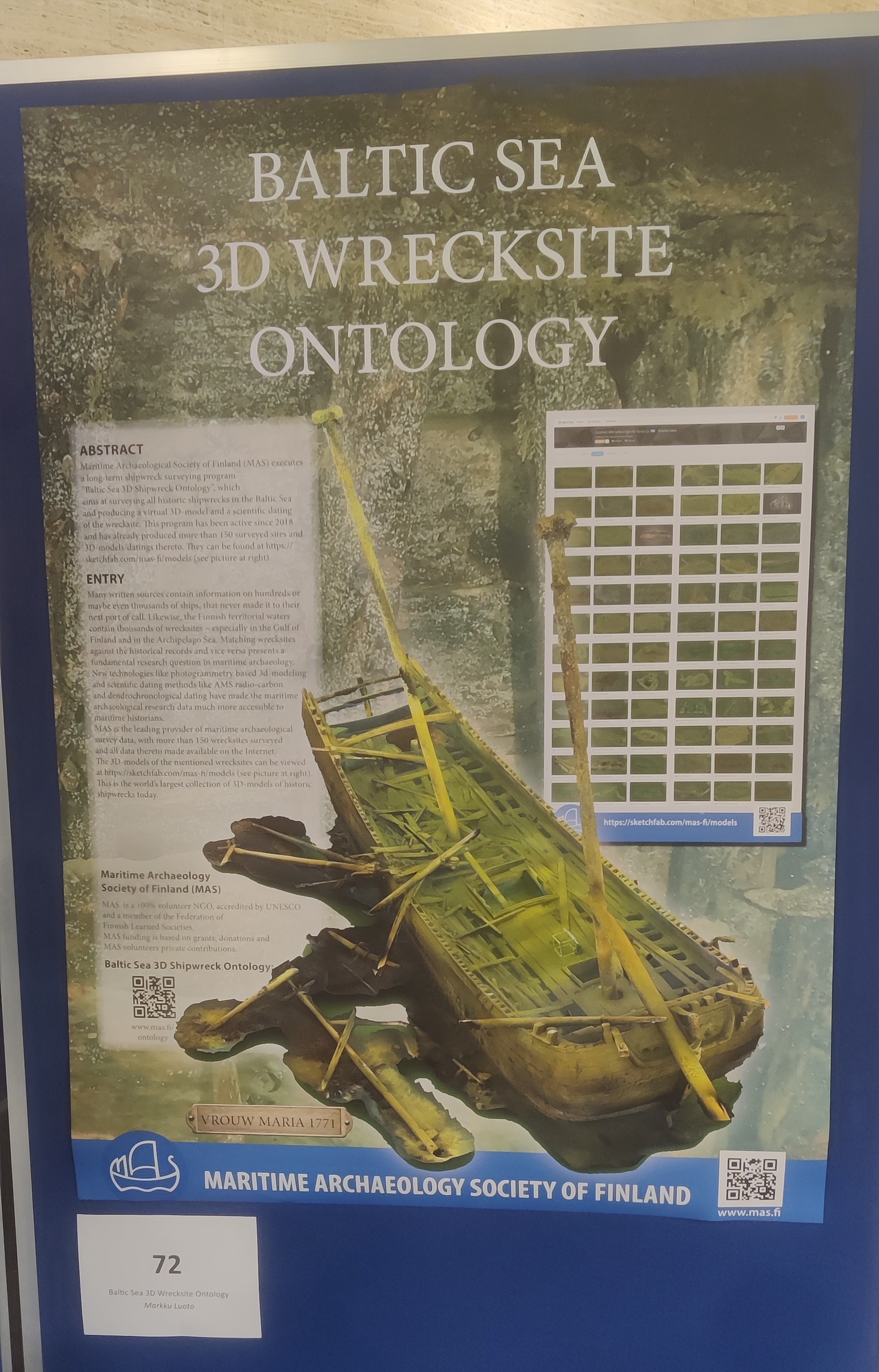
There was also a Raffle. I was allowed to put MAS’ 3D Ontology poster on a board for free if I bought raffle tickets. 20 pounds of raffle tickets did the job and also meant I won a bottle of wine.
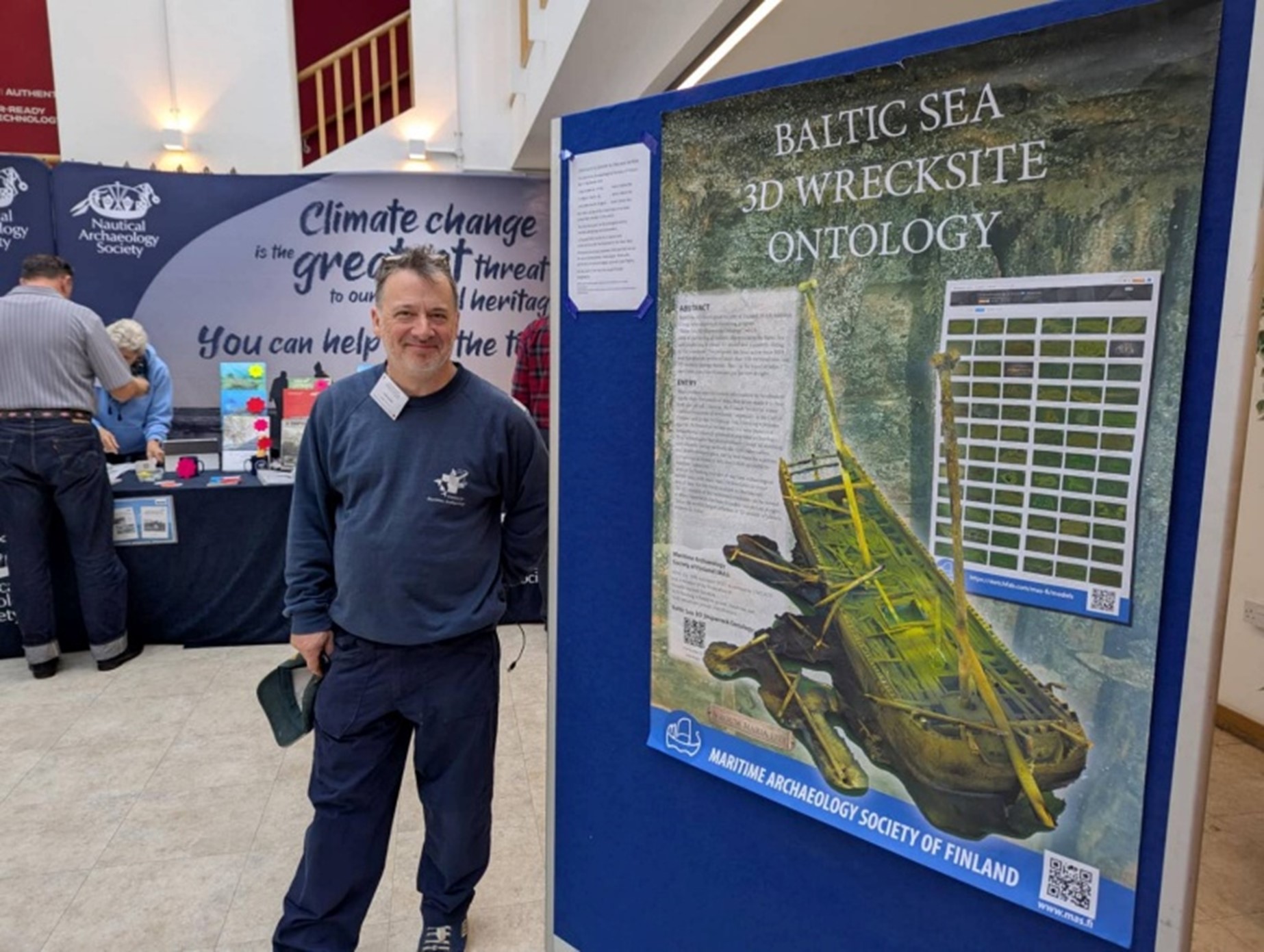
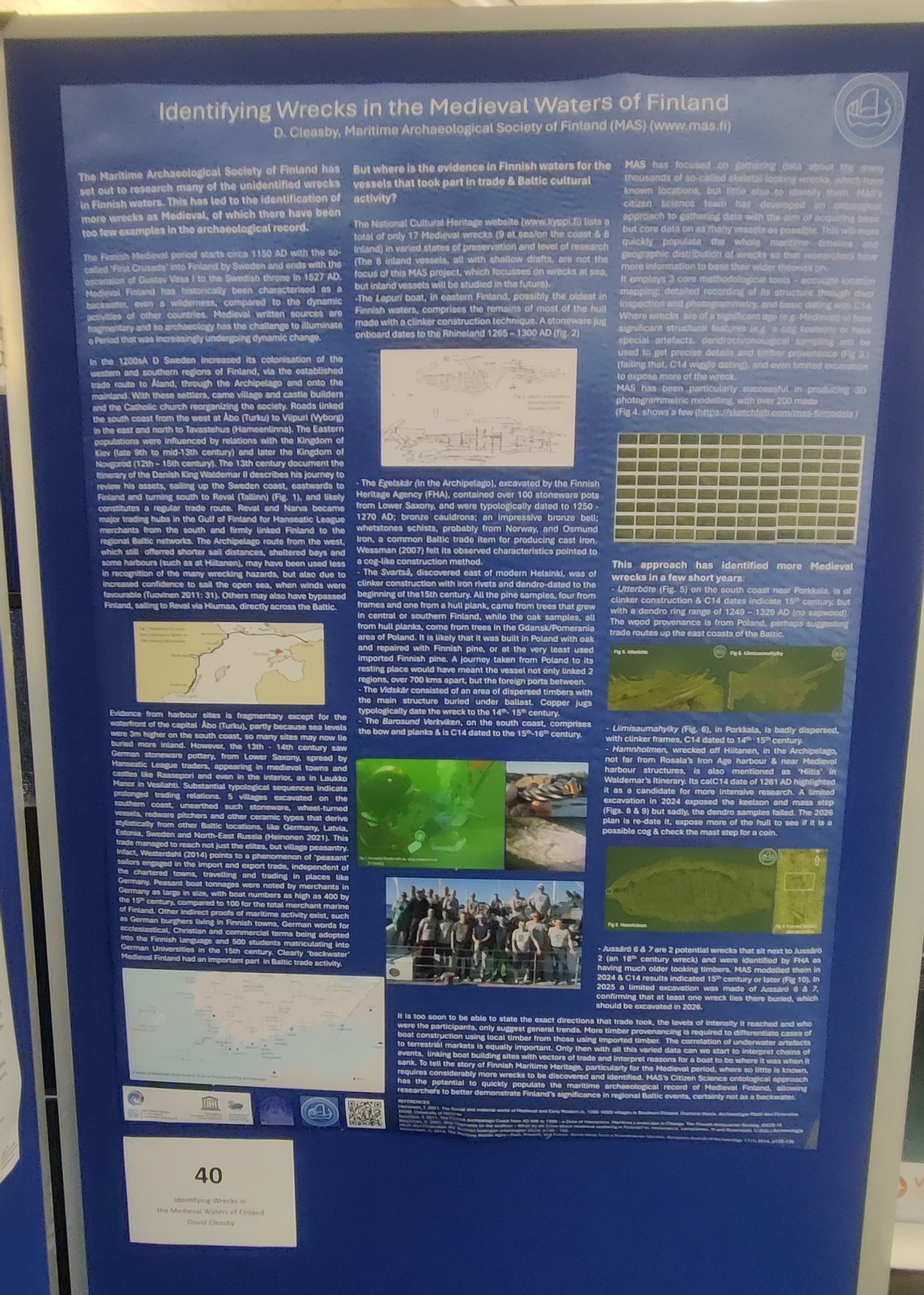
There was a good amount of interest in MAS’ projects from conference attendees. I spoke to some 30 people about our projects and methodologies and highlighted the sorts of fieldwork we will undertake next year, stating we usually have 4-day projects normally in May and August and our longer 11-day early July summer fieldwork. The interested persons included divers from clubs, but also 5 or 6 young researchers doing Masters courses in Maritime Archaeology and related disciplines, whom I hope to hear from.
Next year I hope to finally give a talk at the Conference if the theme is compatible with what we do.
David Cleasby 22.11.25