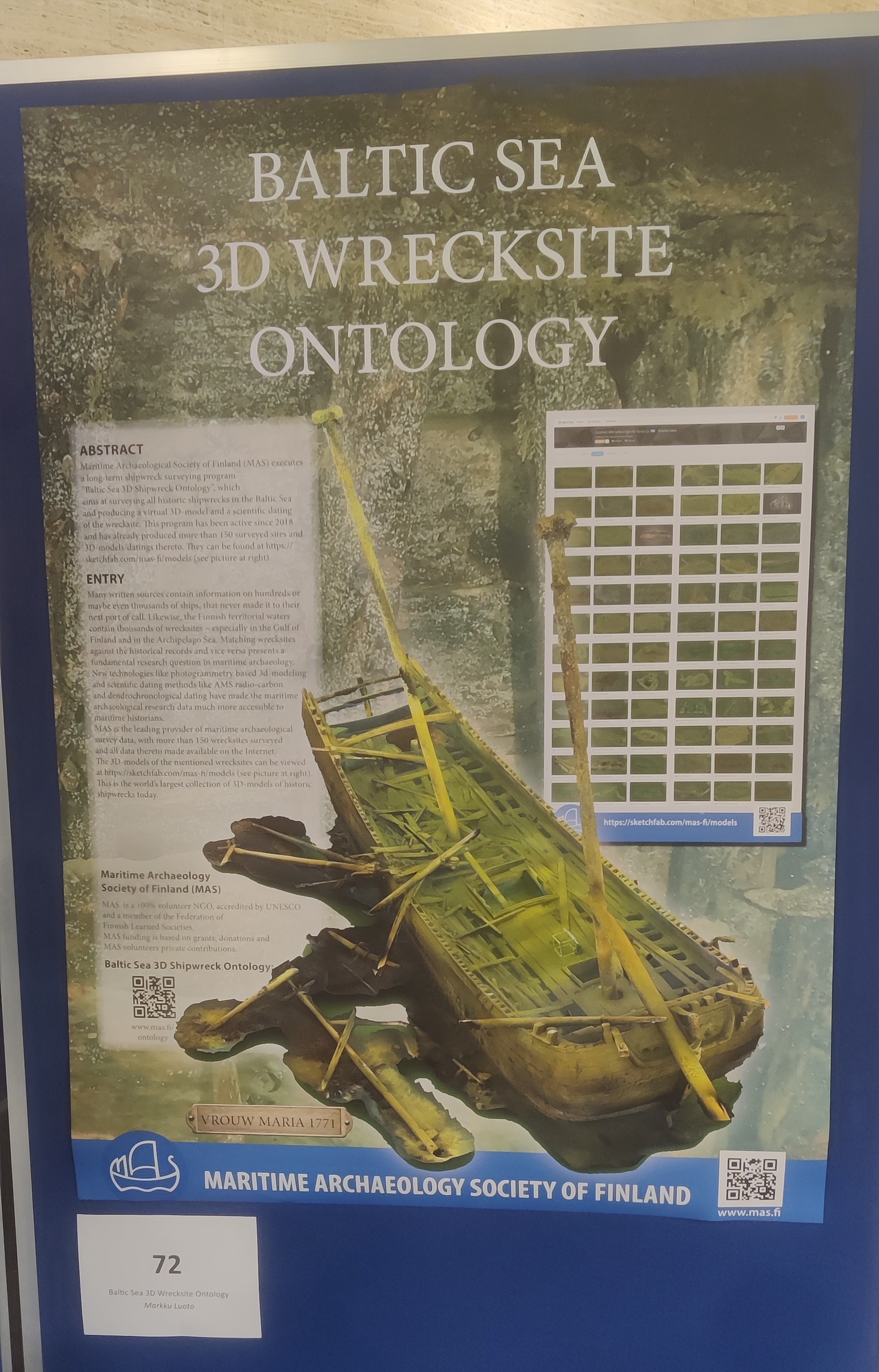


Baltic Sea 3D Wreck Ontology in 30 Seconds
The video above is by the courtesy of Europa Nostra, which granted us the European Heritage Award / Europa Nostra Award 2025.
Reason for Being
Underwater cultural heritage - namely the historic shipwrecks - erode away as you read this. Partly due to the warming of the seas, especially the Baltic, the environmental degradation of the shipwrecks "in situ" has signifficantly increased, compared to the situation just few decades ago. Unlike archaeological objects burried underground, underwater objects are exposed to human introduced wear and environmental erotion. Hence, we're loosing valuable cultural heritage information every day!
Saving wooden shipwrecks as they are now, is an impossible task, due to the sheer number of them: Tens of thousands in the Baltic Sea alone. Saving the cultural heritage information the shipwrecks carry is a giant task too, but it is our responsiblity for the generations to come and for those of age of sail, who left it for us.
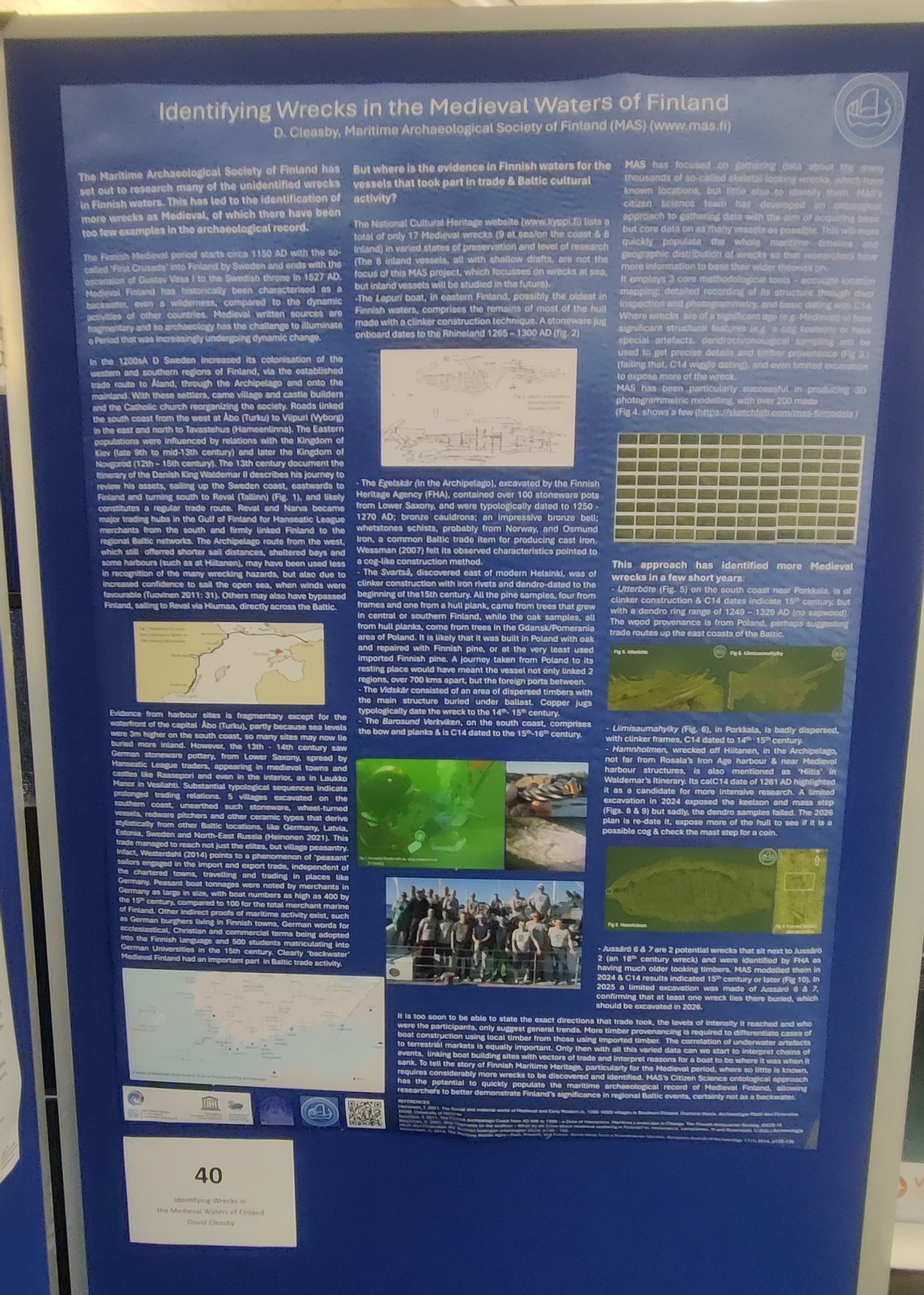
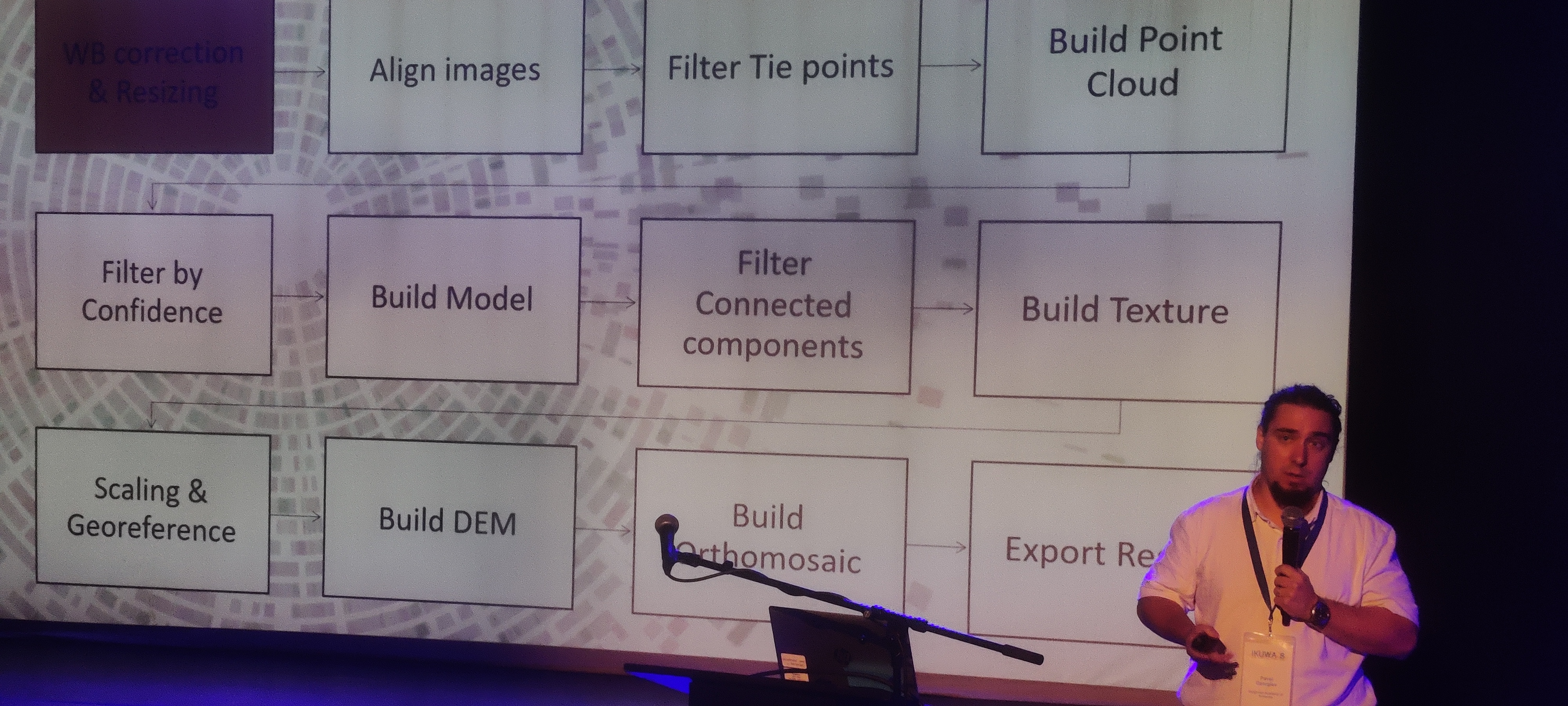
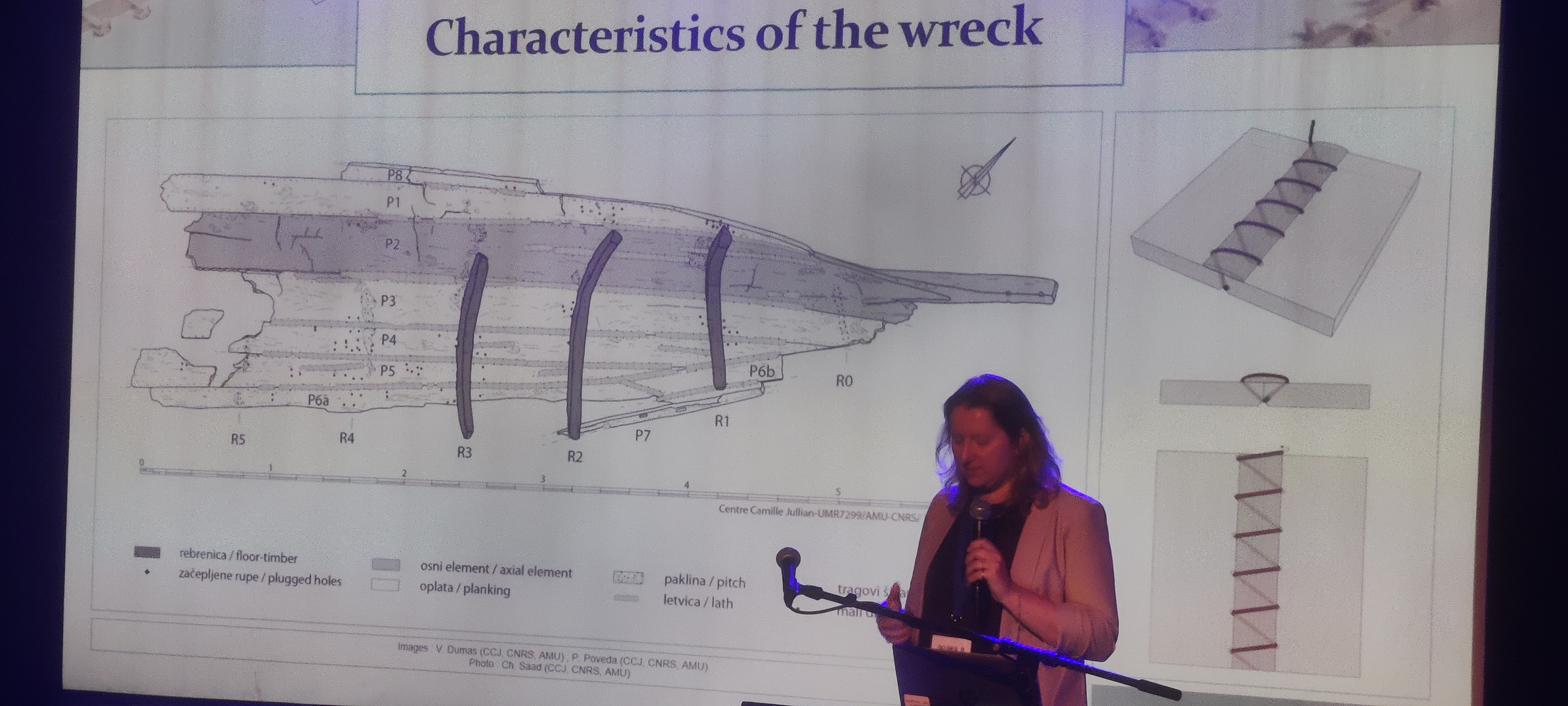
No country which bears Baltic Sea coast has the resources to publicly or comercially carry out the full inventory of shipwrecks for the ontology, thus volunteer workforce and organsations are needed. MAS volunteers have now executed the gatherign of information for the “Baltic Sea 3D Wrecksite Ontology” for almost a decade, thereby creating the worlds largest collection of 3D digital twins of the underwater cultural heritage sites. Learning by doing has led to many methodological innovations and lately redirecteld the whole field of maritime archaeology as a science by enabling the researches around the world to virtually study sites they never visited.
Status of the Progam
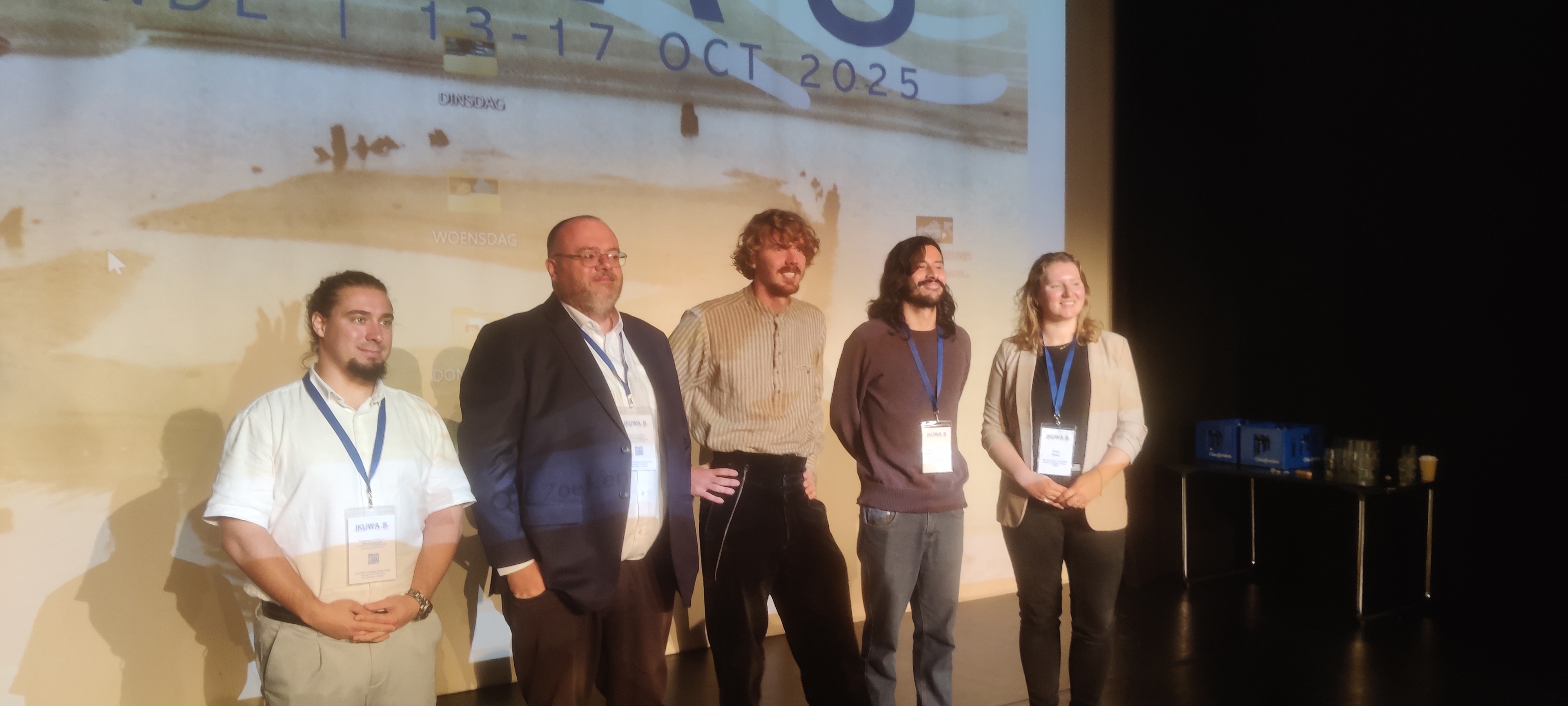
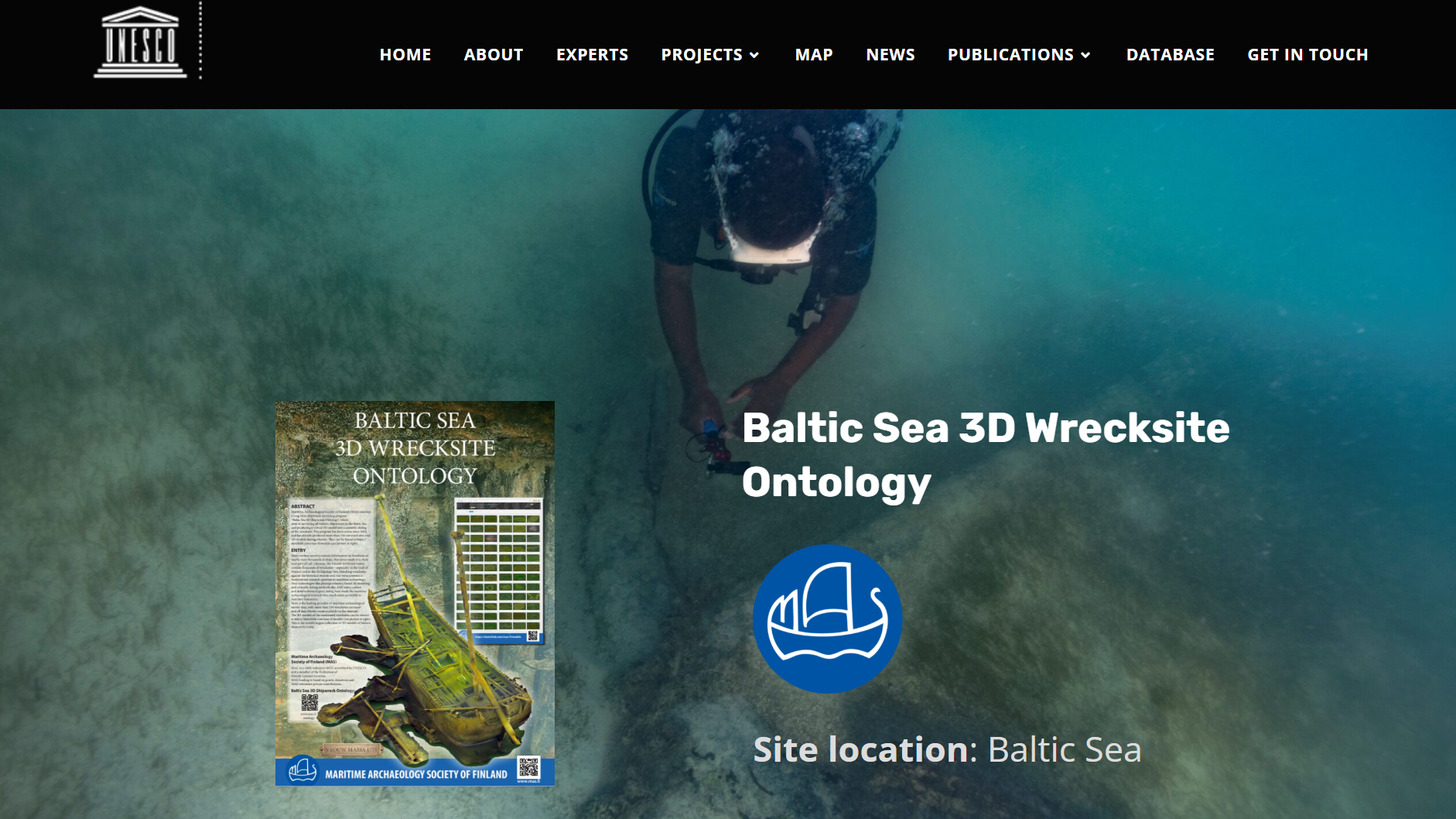
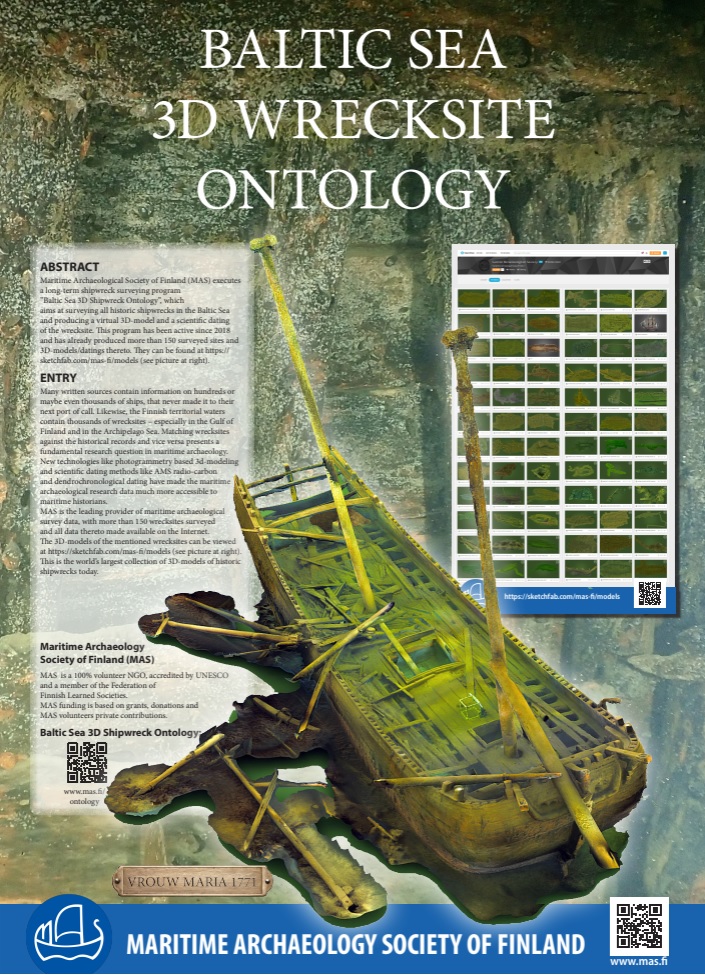 The Ontology program currently exists only virtually in an academic sense, but the field work is carried out almost every day. MAS-Institute is hosting the Open Access/Data/Science research material repository currently at mas.jej.fi and a visual 3D index thereto at Sketchfab.com/mas-fi/. MAS-volunteers have presented the program at several international scientific conferences like ISBSA-VXIII (p.25) and IKUWA8, as well as actively publishing projects within the program at UNESCO's accredited NGO website.
Based on the findings of the Ontology program dozens of academic research projects have emerged: The ones in which MAS in close co-operation with the researcher can be found here: mas.fi/fi/tutkimus/tutkimushankkeet. Nevertheless, the Ontology currently represents only about 10% of the known wrecksites within Finnish territorial waters and maybe just 1-2% of all wrecksites within the Baltic Sea. Thus, there's a lot of inventory and research to be done for generations to come before the Wrecksite Ontology is complete.
MAS-Institute is actively participating in various EU Horizon initiatives, recruiting benefactors and funders, as well as engaging and training contributors to the program.
Path Forward
MAS-Institute is ready to share the methodologies, online resources and lessons learned regarding the Baltic Sea 3D Shipwreck Ontology -program. We are eager to hear from you and support in recruiting organisations outside Finland to replicate and localize what we have done here. We are also actively looking for international partners to co-operate with to form some form of joint venture for applieing funding on a global scale.
All contacts & questions via:
Mr. Markku Luoto, Chairman of the Maritime Archaeological Society and Institute of Finland.
eMail: puheenjohtaja@mas.fi, Tel. +358 40 844 9511 (also SMS, WhatsApp, Signal)